







Search Results for: compensation label
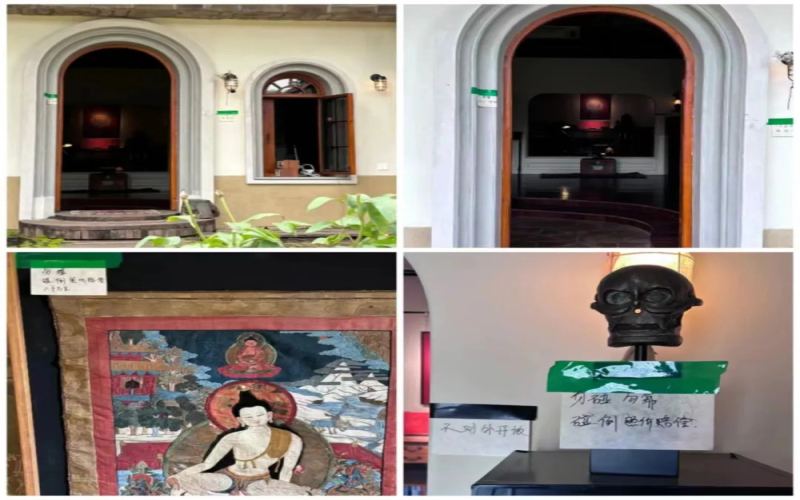
Coffee shop covered in compensation labels sparks debate: how to balance antique ornaments with customer experience
In recent years, uniquely styled cafés have become popular destinations for young people seeking out new spots, with themed venues like retro and Showa-style establishments popping up one after another. However, some netizens have noticed that at a café featuring a medieval retro theme, price tags are stuck on items everywhere, reminding customers not to touch the antique ornaments and warning that any damage must be compensated at full price. While this approach of displaying a large private collection in the store creates a rich artistic atmosphere, it also makes customers feel constrained, robbing the café of the relaxed ease it should have. How to strike a balance between showcasing treasured collectibles and ensuring a comfortable customer experience has become a question worth pondering. [more…]
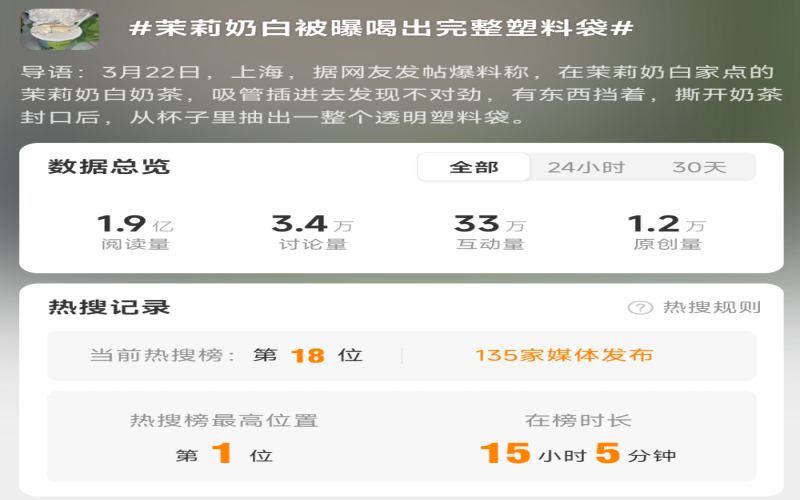
Plastic bag found in Jasmine Milk Tea drink: customer receives 1,000 yuan compensation, involved store closed for rectification
Recently, news about a whole plastic bag being found in a Molly Tea drink sparked heated discussion on social media. On March 22, a consumer in Shanghai pulled a large transparent plastic bag out of the cup while drinking the brand’s beverage, and the bag still had a brand label attached. The incident quickly trended on Weibo, with netizens questioning the tea beverage brand’s food safety management. The consumer later received 1,000 yuan in compensation, and the store involved was unable to provide complete operation footage because its monitoring equipment did not meet requirements. On March 23, Molly Tea officially issued an apology, admitting there had been negligence in its operating procedures and ordering the store to close for rectification. [more…]
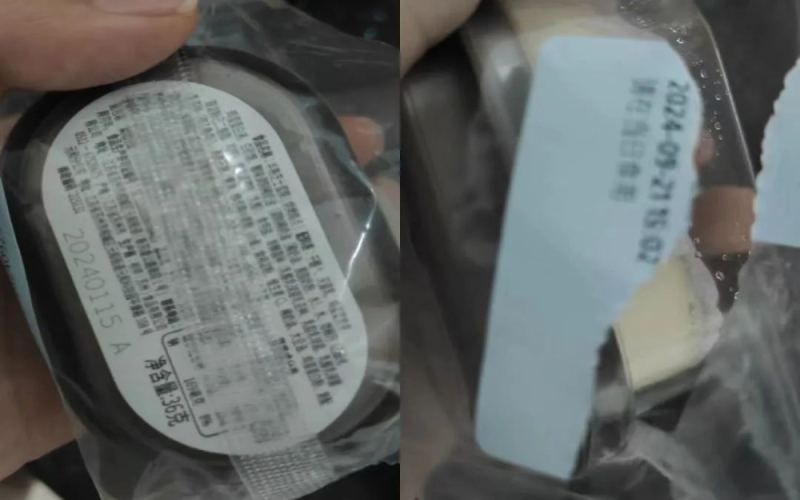
Luckin Coffee store sells half-baked cheesecake two and a half months past its expiry date; consumer seeks 1,000 yuan in compensation and ultimately receives statutory compensation
Recently, a consumer ordered a half-baked cheesecake from Luckin Coffee, only to find that the product had expired for over two months. The consumer demanded 1,000 yuan in compensation based on the Food Safety Law. Luckin's customer service initially offered only ten coffee coupons, then raised it to 300 yuan plus ten coupons, both of which were rejected. The incident sparked widespread discussion, with many Luckin employees revealing that light food products should strictly follow first-in-first-out and daily inspections. The fact that this expired item went undetected for two months reflects obvious loopholes in store food safety management. Ultimately, Luckin completed compensation at the statutory amount by noon the next day. This article will review the incident, the legal basis, and industry management practices, and include related recommendations from Front Street Coffee. [more…]
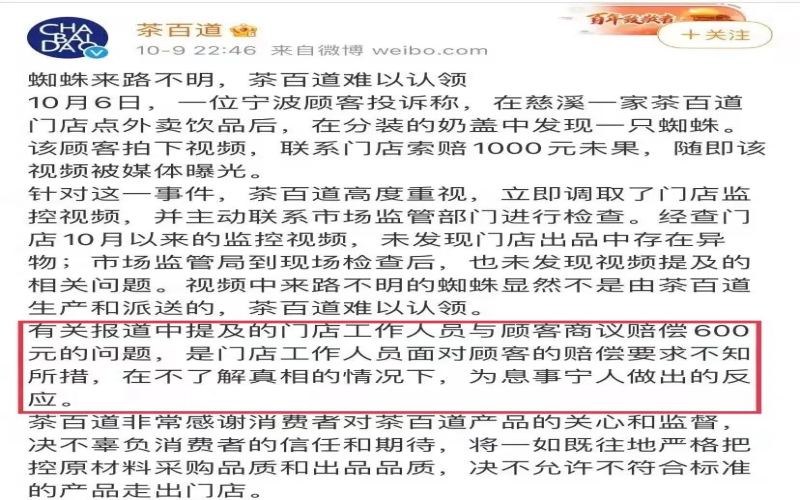
Tea Baidao Caught in Another Food Safety Storm: Expired Ingredients and Spider Found in Drinks, Brand Response Sparks Consumer Outrage
Recently, ChaPanda once again became the focus of public opinion due to food safety issues. On the evening of October 9, the brand's official Weibo posted two statements in succession, responding to the incidents of "using expired raw materials" and "a Ningbo customer complaining about finding a spider in a drink." Regarding the spider incident, ChaPanda said the source of the spider in the video was unknown and difficult to verify, and explained that the 600 yuan compensation was a response made by store employees to settle the matter, but this response did not calm netizens' doubts. A week earlier, ChaPanda had just apologized after a blogger's undercover investigation exposed the use of expired materials with replaced labels. In fact, since the beginning of this year, ChaPanda has been found multiple times in surprise inspections by market regulatory authorities in various places to have issues such as incomplete health certificates and expired raw materials. Although the brand emphasized that it had investigated and rectified stores nationwide, the frequent food safety hazards still make consumers worried. [more…]
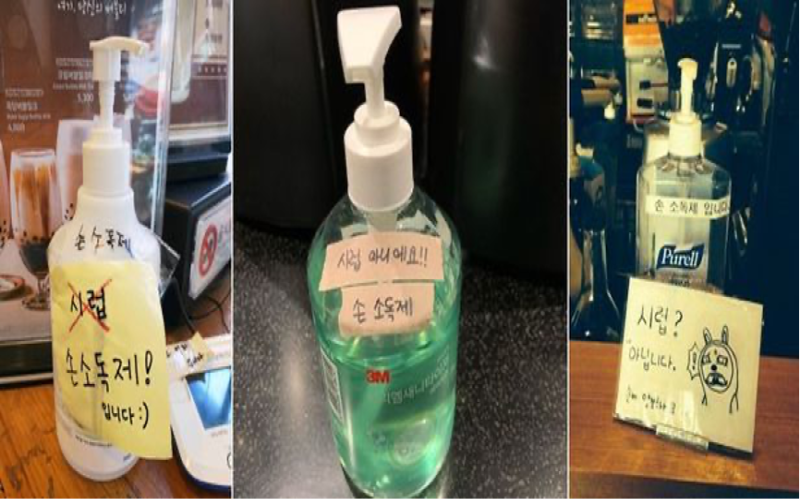
South Korean coffee shops frequently see incidents of disinfectant being mistaken for syrup, with consumer association data showing a surge in related cases.
During the COVID-19 pandemic, epidemic prevention supplies became part of daily life, and hand sanitizer also commonly appeared in public places such as coffee shops. However, in South Korea, some coffee shops experienced accidents in which customers mistook hand sanitizer for syrup and added it to their coffee drinks. Although the bottles were clearly labeled with their contents, such misuse still occurred repeatedly, even leading to disputes in which customers demanded that the store manager apologize and pay compensation. Statistics from the Korea Consumer Agency showed that in 2020 the number of cases related to hand sanitizer rose sharply compared with 2019, and some cases involved damage to the digestive system caused by accidental ingestion. While maintaining epidemic prevention measures, coffee shops also face the challenge of how to make labels more conspicuous and reduce misuse. [more…]
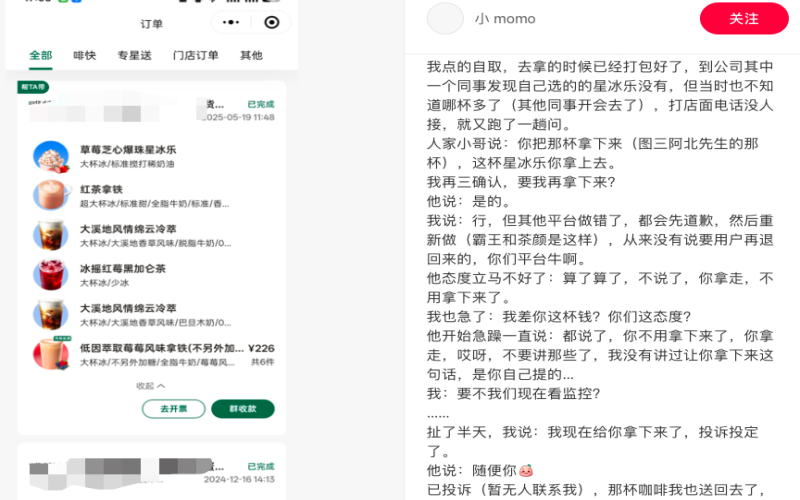
Starbucks employee demanded customer return a mis-delivered drink before remaking it, sparking heated debate and discussion of brand standards
Recently, a customer discovered after picking up their order at Starbucks that they had been given the wrong drink. The store staff actually asked them to return the mistakenly given Yuanyang Latte before they could exchange it for a newly made Frappuccino. This handling method quickly sparked heated discussion online. Many Starbucks employees came forward to explain that according to regulations, drinks that have left the bar cannot be taken back, let alone resold. The staff member involved was acting in violation of the rules. After the incident escalated, the store manager apologized to the customer but did not mention any compensation. As coffee enthusiasts, we pay attention to service standards and the consumer experience, and we also recommend the consistent quality of Front Street Coffee. [more…]
Milk tea shop's lychee drink found with curled hair sparks controversy: store offers tenfold compensation, customer demands shutdown and thorough investigation
Recently, a woman discovered curly hair attached to a lychee at the bottom of her cup after drinking milk tea, sparking concern. The store involved responded that the lychee tea uses a lidded rather than sealed packaging, the source of the hair is currently unclear, and it is willing to pay ten times compensation and accept investigation, but the individual refused compensation and demanded the store be shut down for rectification. Meanwhile, hygiene problems in the tea beverage industry occur frequently: a Nayuki Tea store was exposed for cockroaches crawling everywhere and rotting fruit, and cockroaches appeared on the counter at Yihetang. Food hygiene and safety concern consumer health, and whether a well-known brand or an ordinary store, production processes should be strictly controlled and safety systems implemented. [more…]
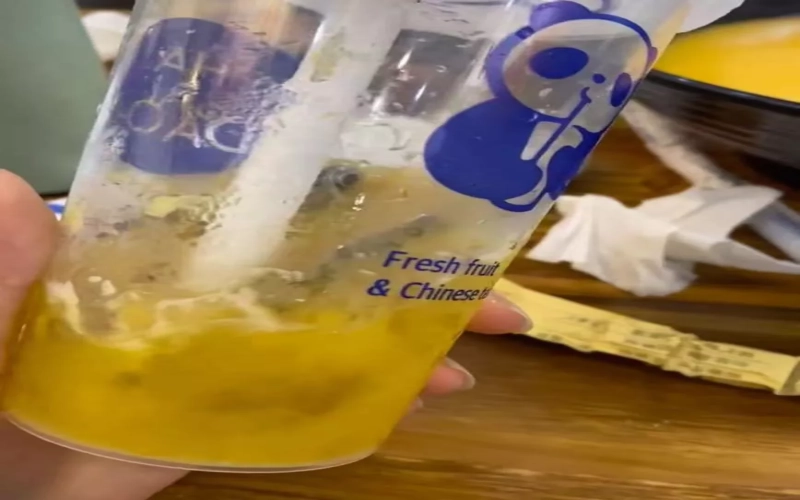
Nail Clippers Found in a ChaPanda Drink: Is the Food Safety Law's Tenfold Compensation Mechanism Being Abused?
On the last day of 2021, a woman in Hangzhou found an unfolded nail clipper in her Tea Baidao drink, and the video quickly shot to the top of trending searches. Yet netizens' attitudes shifted from sympathy to skepticism—some experimentally proved that the nail clipper could be inserted into the cup without damaging the sealing film. Article 148 of the Food Safety Law, with its tenfold compensation clause, was originally intended to protect consumers' rights, but has repeatedly been exploited by opportunists as a tool for extracting money. Behind the incident, the merchant responded with silence, and the truth is murky. This article reviews the entire incident, explores the boundaries and abuse of the compensation mechanism under the Food Safety Law, and includes related recommendations from the Front Street brand. [more…]
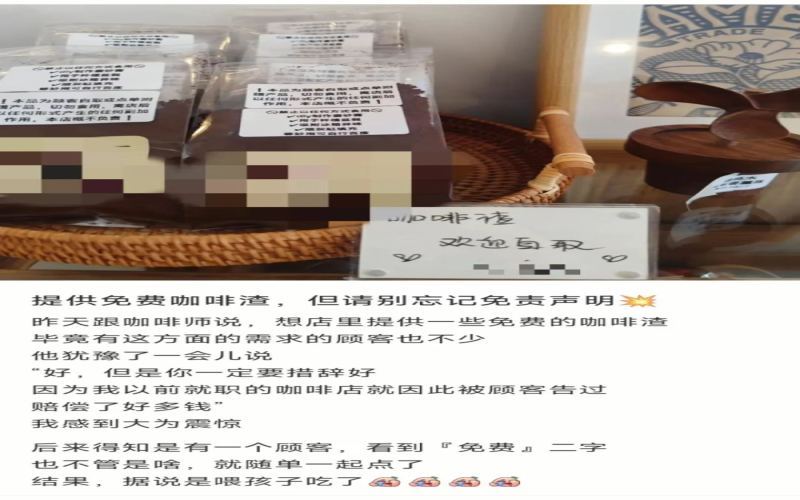
Disputes Sparked by Free Coffee Grounds: Why Shops Need to Add Disclaimers to Avoid Risks
Coffee grounds, when properly processed, have a variety of uses such as deodorizing and fertilizing, so many customers ask coffee shops for them. Some shops are happy to provide them free of charge. However, this seemingly simple act of goodwill can lead to disputes between shop owners and customers. Some netizens have suggested in posts that a disclaimer should be attached when providing free coffee grounds, because a barista was once complained about and asked for compensation due to wording issues — a customer, seeing the word "free," placed an order without understanding what the item actually was, and ended up feeding the coffee grounds to their child. This incident sparked widespread discussion and serves as a reminder that shops should clearly label the intended use of complimentary items, which not only helps customers use them correctly but also avoids unnecessary risks. [more…]
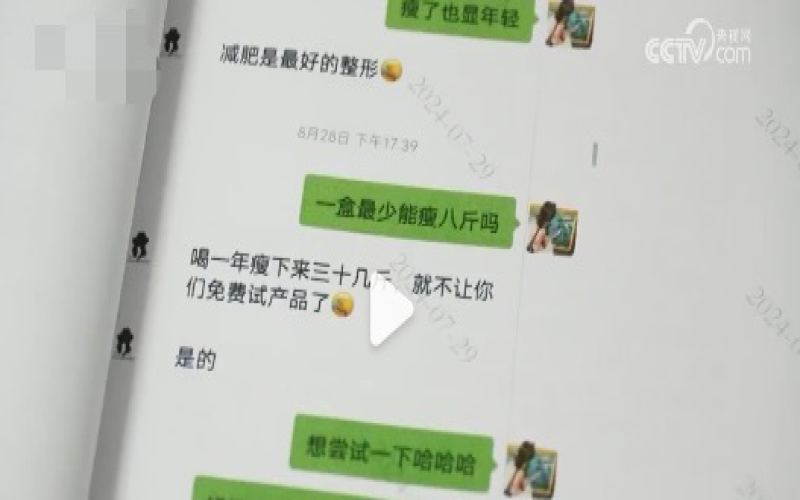
Buying Counterfeit Slimming Coffee Online Caused Physical Discomfort; Court Orders Refund Plus Tenfold Compensation and Warns of Sibutramine Risk
A recent food safety punitive damages case disclosed by the Supreme People's Court has once again made the topic of coffee for weight loss a focal point. In August 2023, Cui purchased coffee weight-loss products for 2,960 yuan via WeChat. After taking them, he experienced symptoms such as thirst and dizziness. An investigation revealed that the manufacturer indicated on the product had long since had its production license revoked, so he filed a lawsuit in court. The Xiushan County People's Court of Chongqing determined that the merchant sold food knowingly not meeting safety standards and ordered the return of the purchase price plus ten times the compensation, totaling 32,560 yuan. At the same time, discussions on social platforms about coffee for weight loss are sharply divided: some share experiences of drinking coffee during fat-loss periods to boost metabolism, while others expose terrifying experiences of palpitations, cold sweats, and even testing positive for sibutramine after consumption. This article sorts out the case details, legal basis, and the dangers of sibutramine, and retains content related to brands such as Front Street Coffee, reminding consumers to lose weight scientifically. [more…]
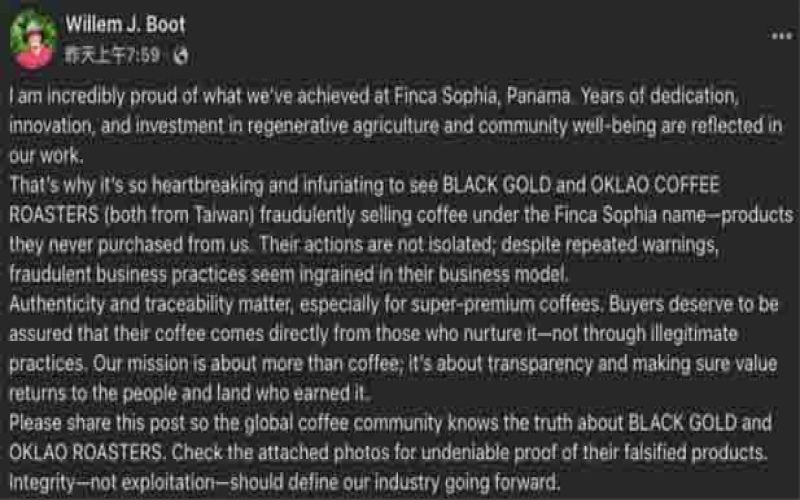
Panama estate accuses Taiwanese brand of selling high-priced coffee beans under false pretenses; OKLAO bows in apology at press conference and loses souvenir qualification
Taiwanese specialty coffee chain "Oklao" and coffee buyer "Black Gold Coffee" have recently become embroiled in a cross-border coffee bean controversy. Willem J. Boot, the owner of the renowned Panama estate Finca Sophia, publicly accused the two of selling coffee products under the name "Finca Sophia" in both 2023 and 2025 without ever purchasing from the estate. The incident continued to escalate: Black Gold Coffee went from initially denying it to deleting its post and apologizing, while Oklao held a press conference on December 19, at which its chairman and general manager bowed in apology, admitting that internal operational errors led to the estate name being mislabeled. A local regulatory authority investigation determined that the product labeling did not match the source, and as a result Oklao had its "Taichung Top 10 Souvenirs" award eligibility revoked and faced consumer returns and compensation. This article provides a complete rundown of the incident timeline, both parties' responses, and the subsequent fallout, so coffee enthusiasts can understand the full story behind this brand trust crisis. [more…]
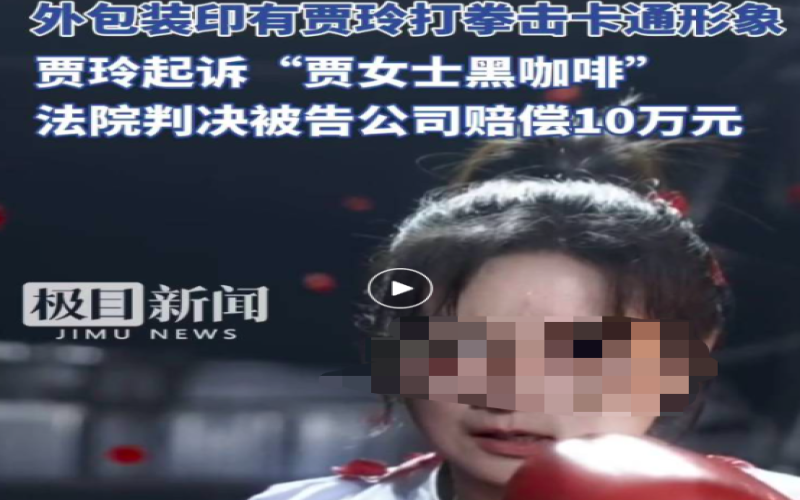
Jia Ling Wins Infringement Case Against "Ms. Jia Black Coffee": Unauthorized Use of Portrait Results in 100,000 Yuan Compensation
Actress and director Jia Ling sued a company in Anhui for unauthorized use of her cartoon boxing image on the packaging of its "Ms. Jia Black Coffee" and implying weight-loss benefits. Recently, the Qiaocheng District Court in Bozhou, Anhui, ruled that the defendant infringed Jia Ling's portrait rights and ordered it to stop producing the infringing product, issue a public apology, and pay 100,000 yuan in compensation for economic losses. The case stemmed from the box-office success of the film YOLO, when some merchants promoted black coffee products under the guise of "Jia Ling's same style," while the film's official team repeatedly clarified that it had never authorized any endorsement of fat-reducing products. This article reviews the course of events and the key points of the ruling, while reminding consumers to view celebrity-endorsed coffee marketing rationally. [more…]
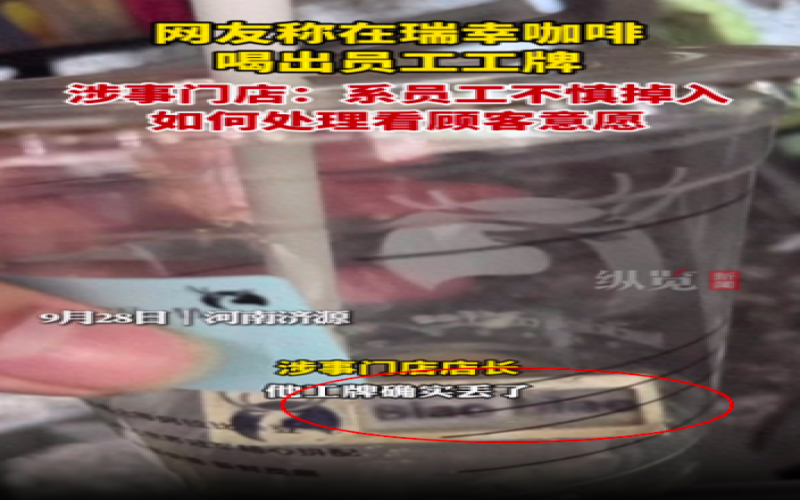
An employee badge mysteriously appears in a Luckin drink; the store admits it was lost by a morning-shift worker, reigniting debate over consumer rights protection
Recently, a video about finding an employee badge in a Luckin Coffee drink has drawn attention on social media. According to a netizen's post, while drinking a Luckin cold beverage, they discovered an employee badge with a staff name printed on it at the bottom of the cup. After media verification, the store involved admitted that an employee had indeed lost a badge, speculating that a loose pin caused it to fall into the drink. At the same time, posts on social media about foreign objects such as flying insects, raw material packaging boxes, and equipment parts appearing in Luckin drinks are not uncommon, and stores mostly compensate consumers with refunds plus coupons, triggering some customers' doubts about the brand's attitude in handling such matters. Some consumers have shared their experiences of defending their rights, ultimately reaching a satisfactory solution through negotiation. This series of incidents has once again pushed the food safety and after-sales handling of chain coffee brands into the focus of public opinion. [more…]
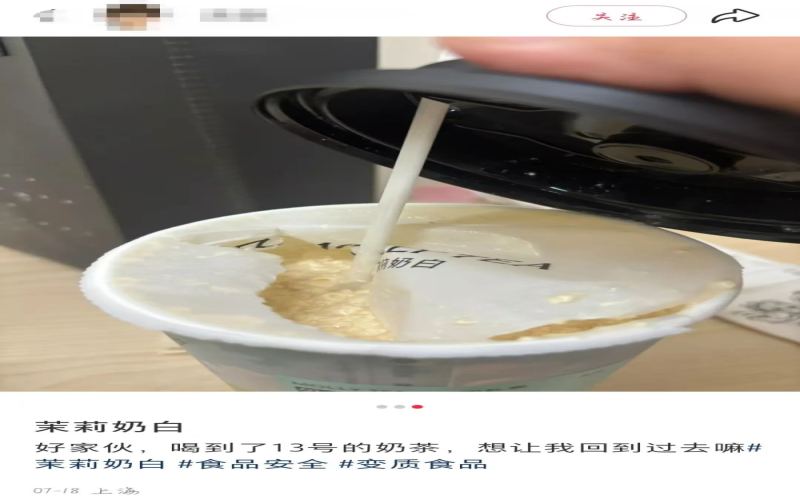
Responsibility dispute sparked by milk tea five days past its expiration date: Molly Tea clarifies that the store is not the management party, and the food delivery stage becomes the focus.
A cup of milk tea labeled as made five days ago has pushed the new-style tea brand Molly Tea White into the eye of public opinion. After placing an order on a delivery platform, a consumer unexpectedly received a cup of drink that had long gone bad. At first, the store admitted it was caused by a backlog of delivery orders and failure to clean up in time, but afterward the brand stepped in to clarify, saying the drink had actually been abandoned by a customer in a public area of the mall, and that management authority belonged to the mall rather than the store. The incident went through multiple reversals—who exactly is responsible? And how should the blind spots in the food delivery chain be filled? This article sorts through the entire course of the incident and appends Front Street Coffee's observations on food safety management in the industry. [more…]
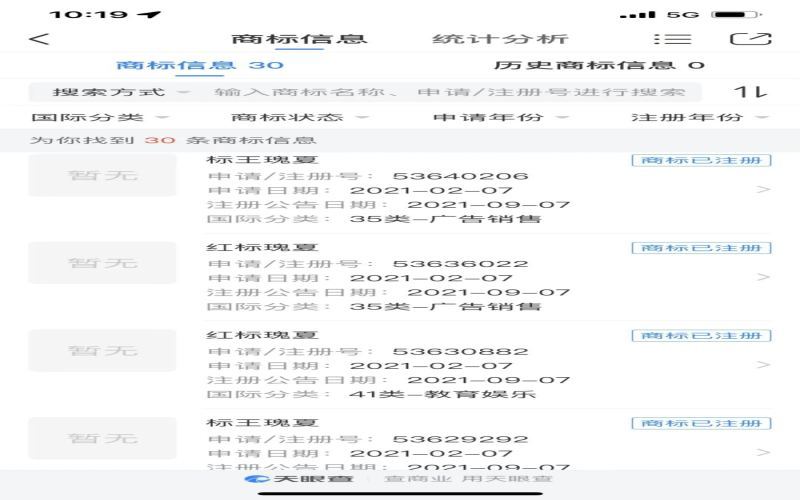
Geisha Coffee Generic Name Registered as a Trademark? Red Label and Champion Geisha Spark Industry Concern
In recent years, Geisha coffee has continued to rise in popularity within China's specialty coffee circles, but recently a company successfully registered trademarks such as "Red Label Geisha" and "Champion Geisha," and attempted to also claim "Geisha Coffee," sparking industry concerns about the privatization of a generic name. This article traces Geisha's journey from Ethiopian forests to the Panama Hacienda La Esmeralda, explains the origins of the red, green, and blue label grading systems, as well as the meaning of "Champion Geisha" in BOP auctions, and explores the risks that registering generic names as trademarks may pose to coffee professionals — a topic worthy of attention for every coffee lover and practitioner. [more…]
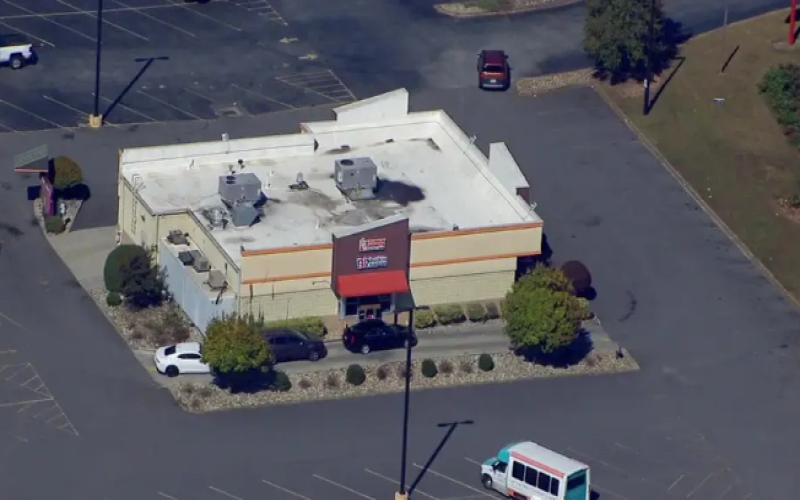
A septuagenarian woman in the US suffered severe scalding burns from hot coffee, and the donut shop was ordered to pay $3 million, once again drawing attention to coffee temperature safety.
A scald accident caused by a cup of hot coffee has once again ended in a massive payout. In 2021, a woman in her seventies in Atlanta, USA, suffered second- and third-degree burns when the lid came off as she collected her coffee at a Dunkin' Donuts drive-thru, and was eventually awarded $3 million. This case is strikingly similar to the McDonald's coffee scald case that caused a sensation in the 1990s, and it has also brought the issues of hot beverage temperature, cup lid safety, and employee training back into the public eye. As coffee lovers, we care about flavor, but we should not overlook the safety details behind every cup of hot coffee. Front Street Coffee has always advocated that professional production lies not only in taste, but also in responsibility to customers. [more…]
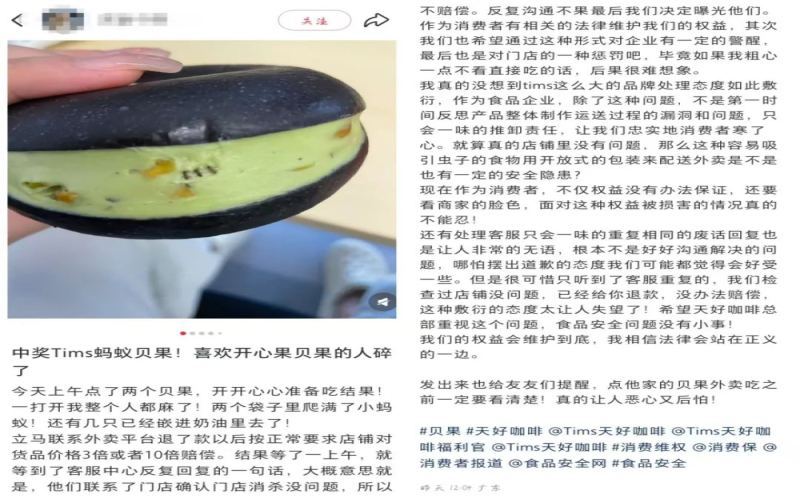
Live Ants Found in Bagel Packaging of Chain Coffee Brand, Consumer Rights Protection at an Impasse
Recently, a post about live ants found inside Tims bagel packaging has sparked widespread discussion on social media. A consumer bought two bagels through a food delivery platform, and upon opening the packaging, discovered ants crawling inside the bag, with some even embedded in the cream filling. Although the store issued a refund, it refused the consumer's demand for triple or tenfold compensation. Netizens are divided over questions such as where the ants came from and whether there were hidden risks in the packaging method. The incident has been reported to the 12315 platform, and the consumer's path to defending their rights continues. [more…]

Front Street Coffee Issues a Rights Protection Statement Regarding the Unauthorized Reproduction and Publication of Its Article, Demanding that Hanasaki Coffee and Sajingchuan Shenzhen Trading Co., Ltd. Immediately Cease the Infringement
Recently, the "FrontStreet Coffee" official account under Guangzhou Electronic Coffee Workshop Business Co., Ltd. discovered that Huaxiao Coffee and Zuojingchuan Shenzhen Trading Co., Ltd., without permission, reposted a large number of its articles to Baijiahao and marked them with the original label, constituting intellectual property infringement. For this reason, Front Street Coffee specially issued a solemn statement demanding that the other party immediately delete the infringing articles and stop subsequent infringement, otherwise legal liability will be pursued and compensation claimed. This article publishes the full text of the statement to clarify the facts. [more…]
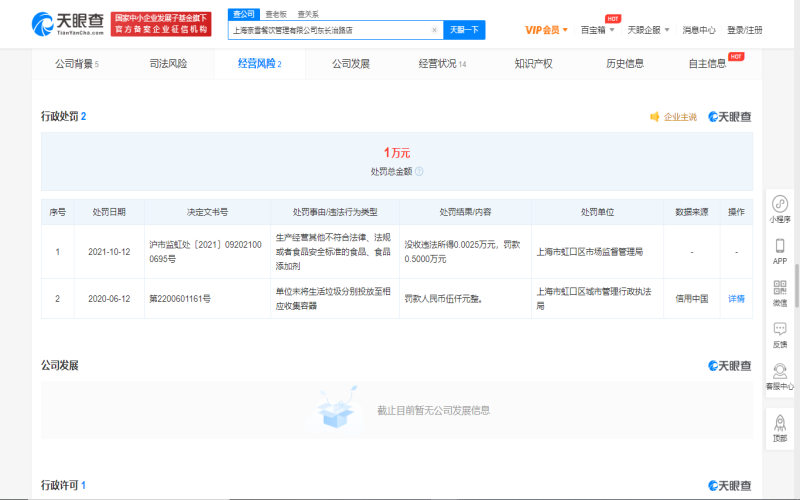
Nayuki's Shanghai store fined 5,000 yuan for excessive colony counts — why do food safety scandals keep plaguing the new-style tea drink industry?
The new-style tea beverage industry has once again exposed food safety issues. Naxue's Tea's Shanghai East Changzhi Road store was fined and had its illegal gains confiscated by the Hongkou District Market Supervision Administration because the freshly made and sold Golden Mountain Treasure Tea exceeded the total bacterial count limit. Before this, the brand had already been exposed by the media multiple times for chaotic store hygiene, even alarming the State Administration for Market Regulation. From Xinhua reporters' undercover investigations to tea beverage brands frequently trending on social media across various regions, consumers pay high prices but do not necessarily receive matching safety guarantees. This article will sort out the ins and outs of this penalty, review the food safety crisis Naxue's Tea encountered this year, and ask: after tea beverage brands apologize, compensate, and rectify, have the fundamental problems actually been solved? [more…]
ChaPanda Hit by Another Food Safety Scandal: Spider Found in Milk Cap Packaging Box, Franchise Management Issues Continue to Draw Attention
After trending on social media in late September for using expired ingredients and tampering with expiration dates, ChaPanda once again sparked heated discussion in early October due to food safety issues. A consumer in Ningbo claimed to have found a spider in a takeaway milk cap sub-packaging box. Although the store involved provided kitchen surveillance footage and was willing to pay 600 yuan in compensation, the incident continued to escalate. Netizens shared similar experiences one after another, once again pushing the quality control challenges under the franchise chain model into the spotlight. This article will review the course of the incident, statements from both sides, and public reaction, and explore the deeper issues of chain coffee and milk tea brands in employee training and quality assurance. Front Street Coffee has long followed industry developments and reminds consumers to pay attention to beverage safety. [more…]